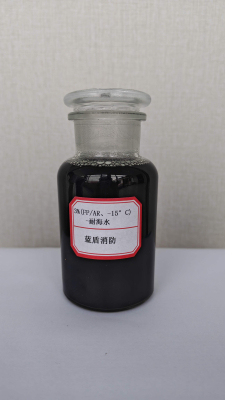
Marine Grade AFFF Concentrate for Shipboard Fires
Shipboard fire protection is one of the most demanding safety challenges in the maritime industry. Confined spaces, flammable fuels, complex machinery and limited evacuation options exist. Fire suppression systems must work fast, reliably and predictably. Marine Grade AFFF Concentrate is a cornerstone technology for combating liquid fuel fires at sea. It is trusted by ship owners, naval architects and marine safety officers worldwide.
1. Understanding Marine Grade AFFF Concentrate and Its Role at Sea
Marine Grade AFFF Concentrate is a specialized firefighting foam formulation. It is made just for maritime environments. “AFFF” stands for Aqueous Film Forming Foam. It is a water-based extinguishing agent. It can suppress Class B fires fast. These fires involve flammable liquids like diesel, gasoline, crude oil and jet fuel.
Land-based foam agents work differently. Marine Grade AFFF Concentrate is engineered to perform well under shipboard conditions. These conditions include:
High humidity and salt-laden air
Variable water quality (freshwater or seawater)
Constant vibration and vessel motion
Long-term storage in fixed foam systems
In use, this concentrate is mixed with water. It makes AFFF Fire Fighting Foam. The foam spreads quickly across burning fuel surfaces. The foam forms a thin aqueous film. The film separates oxygen from fuel vapors. It also cools the fire zone.
Marine Grade AFFF Concentrate is very important. It has high extinguishing efficiency. It can control and prevent re-ignition too. This is a big advantage in enclosed shipboard spaces.
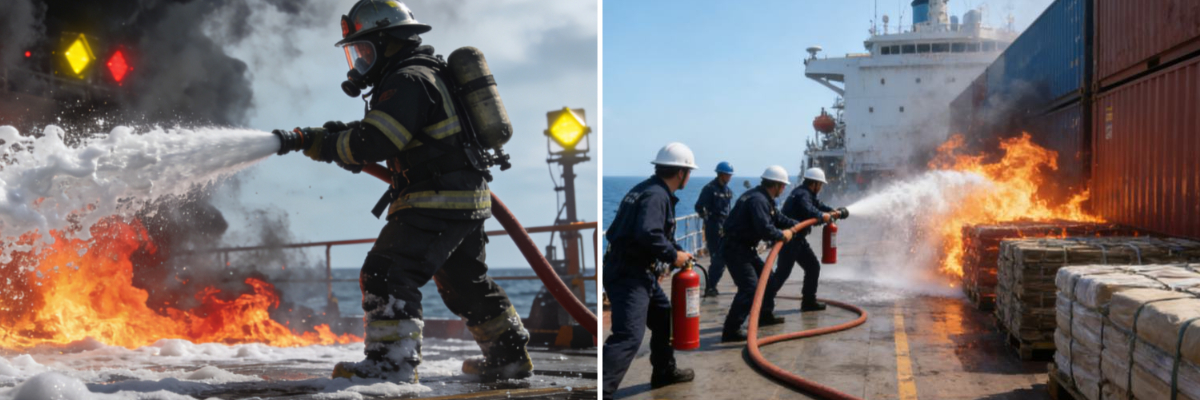
2. The Science Behind Rapid Fire Knockdown at Sea
Marine Grade AFFF Concentrate performs well because of advanced surface chemistry. Its formulation has special surfactants. They lower water’s surface tension a lot. The solution can flow freely across hydrocarbon fuels. It does not break apart.
Once deployed, Marine Grade AFFF Concentrate works in two ways:
It forms a foam blanket for physical coverage
It releases an aqueous film for vapor suppression
This combination helps AFFF Fire Fighting Foam spread faster than traditional foams. It seals the fuel surface. It stops vapor generation. Vapor generation is the main cause of flame spread.
Fires at sea can grow stronger in seconds. This rapid knockdown ability is critical. Marine Grade AFFF Concentrate helps crews take control early. It reduces structural damage. It limits secondary hazards.
3. Critical Shipboard Fire Scenarios and Applications
Fire risks on vessels are diverse and severe. Marine Grade AFFF Concentrate works very well in some areas. These areas have liquid fuels and unavoidable ignition sources.
Common shipboard applications include:
Engine rooms and machinery spaces with pressurized fuel systems
Fuel transfer stations and pump rooms
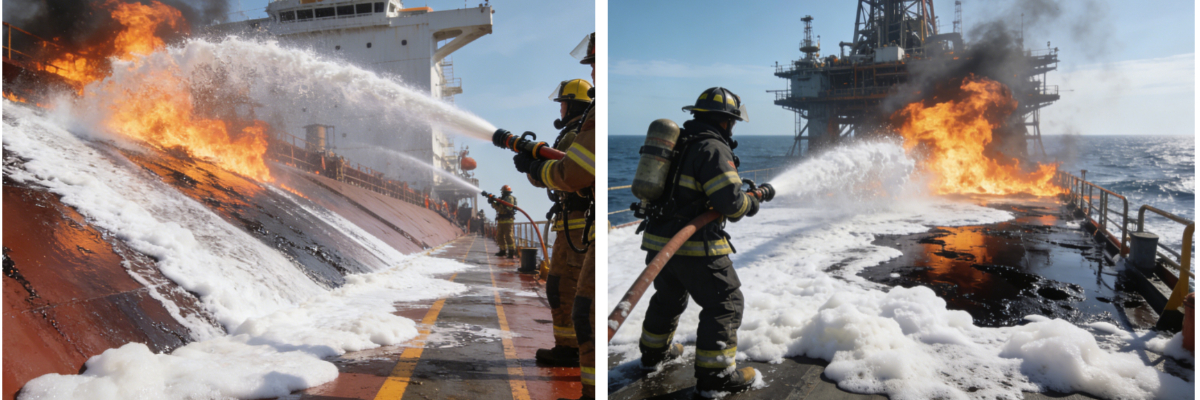
Helicopter landing decks (aviation fuel fires need quick suppression)
Ro-Ro decks and enclosed cargo spaces with vehicles or fuel-bearing equipment
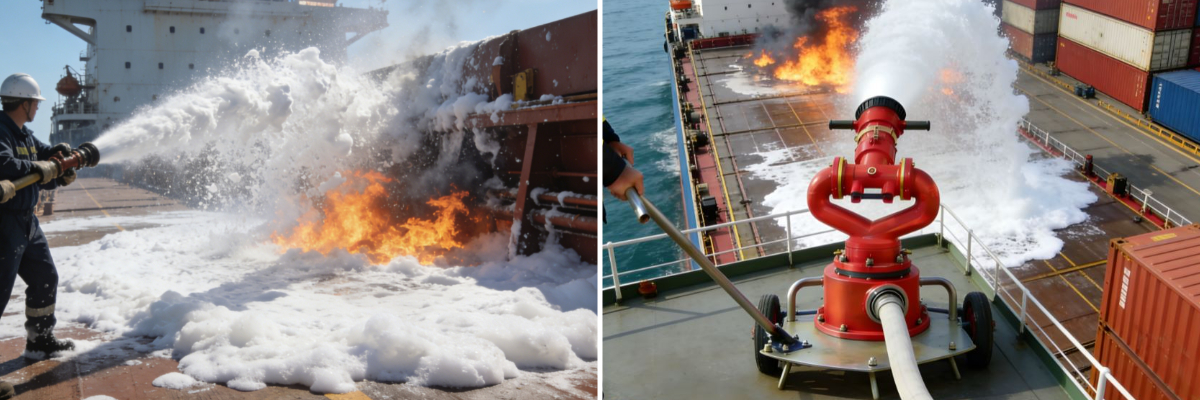
In these places, Marine Grade AFFF Concentrate is used in many ways. It can be delivered by fixed foam systems, monitors, sprinklers or portable foam equipment. Once activated, AFFF Fire Fighting Foam stays in place. It works even on inclined decks or when the vessel moves. It is ideal for use at sea.
4. Environmental Responsibility and Crew Safety at Sea
Environmental awareness is growing in the maritime industry. Fire protection solutions need to be effective. They also need to be used responsibly. Modern Marine Grade AFFF Concentrate formulations are safer. They still have high suppression performance.
Key considerations include:
Use it in controlled ways to avoid unnecessary discharge
Improve formulation stability to lower degradation risks
Keep crew safe during handling with training and standard procedures
AFFF Fire Fighting Foam is still one of the most reliable agents for flammable liquid fires. Proper system design, crew awareness and post-incident containment are important. They are needed for responsible marine operations.
5. Selecting and Maintaining the Right Foam Concentrate
You need a strategic plan to choose Marine Grade AFFF Concentrate. Do not pick it only based on cost. The right product must fit your vessel design, fire risk and system compatibility.
Important selection factors include:
It works with existing foam proportioning equipment
It performs well with seawater and freshwater
It has a long shelf life in marine storage
It has consistent foam expansion and drainage characteristics
Routine inspection and testing are very important too. High-quality Marine Grade AFFF Concentrate can degrade over time. This happens if it is stored poorly. Regular sampling is necessary. It makes sure the concentrate makes effective AFFF Fire Fighting Foam in emergencies.
6. Future Trends in Marine Firefighting Foam Technology
Maritime fire protection is innovating. It changes Marine Grade AFFF Concentrate. Manufacturers focus on better efficiency. They also want to cut total foam use.
Emerging trends include:
Stronger suppression performance at lower application rates
Better stability in extreme temperatures
Works with hybrid fire detection and suppression systems
Other fire agents are appearing now. Marine Grade AFFF Concentrate is still a standard solution. It has a long good track record. AFFF Fire Fighting Foam will keep playing a critical role in shipboard fire defense.
Conclusion: A Proven Standard for Shipboard Fire Safety
Marine Grade AFFF Concentrate is used from engine rooms to helicopter decks. Few firefighting tools are as reliable and flexible. It suppresses flammable liquid fires fast. It controls vapor release. It prevents re-ignition. It is a trusted choice in the global maritime industry.
Ship designs are changing. Safety expectations are getting higher. Marine Grade AFFF Concentrate and AFFF Fire Fighting Foam are still proven and dependable. They protect lives, vessels and assets at sea.