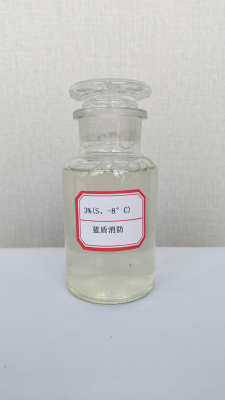
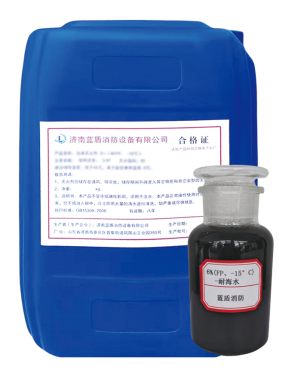
Firefighting for Port Terminals and Ship Engine Rooms: Application Characteristics of Seawater-Resistant Foam Concentrate
With the continuous development of global shipping trade, fire safety risks are rising in port oil loading and unloading areas, ship engine rooms, fuel oil tanks and offshore platforms. Ports are located in special coastal environments, where seawater is commonly used directly as firefighting water supply. Ordinary foam concentrate tends to suffer rapid foam collapse, sharp drop in expansion ratio and excessive drainage rate when mixed with seawater. It is difficult to form a stable fire-suppression foam layer. Once an oil spill fire breaks out, flowing fire and re-ignition may easily occur, threatening port facilities, ship equipment and personnel safety.
Seawater-resistant foam concentrate is specially developed for marine firefighting conditions. As a core agent for suppressing Class B liquid fires at port terminals and in ship engine rooms, it is widely used in port oil handling zones, ship engine rooms, fuel tanks, supporting offshore drilling facilities and port hazardous goods yards. Many fire engineering contractors, shipping companies and port procurement teams often confuse ordinary foam liquid with seawater-resistant foam concentrate. Combining practical working conditions, this article elaborates on the core features, applicable scenarios, selection criteria, storage and maintenance requirements of seawater-resistant foam concentrate.
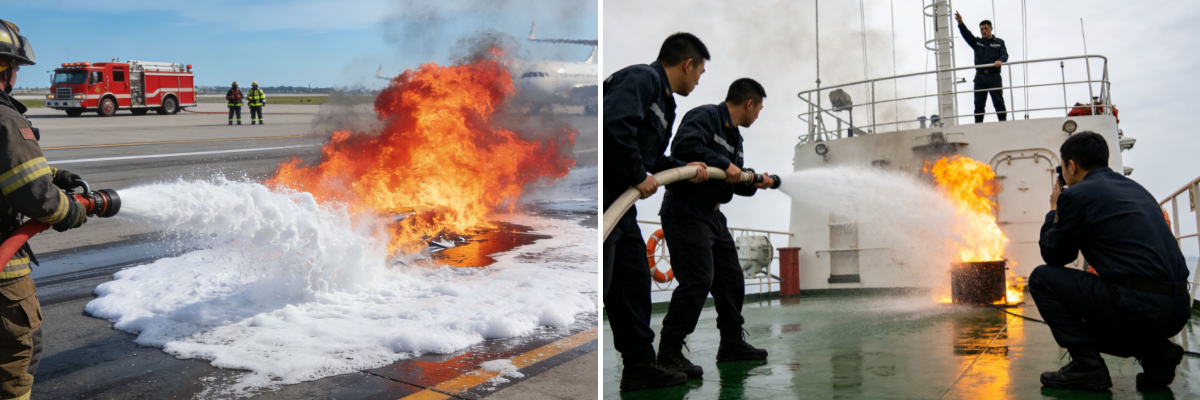
1. Why Ordinary Foam Concentrate Cannot Be Used Directly for Port and Ship Firefighting
Ordinary foam concentrate is formulated for mixing and foaming with fresh water and adapted to the ionic environment of fresh water. Seawater contains high concentrations of chloride ions, calcium, magnesium ions and other salts, making it highly mineralized. When ordinary foam stock solution mixes with seawater, salt ions will destroy the surfactant system inside the foam liquid. The foam film loses toughness quickly, the expansion ratio drops significantly, foam stability deteriorates and the foam dissipates rapidly. A persistent covering barrier on the fuel surface cannot be formed, the smothering effect fails, and the fire is prone to re-ignition.
Many fixed foam fire extinguishing systems for port terminals and ships are designed to take seawater as the firefighting water source. This imposes strict requirements on the salt resistance of foam concentrate. Seawater-resistant foam concentrate is developed to solve the problem of foam failure in seawater.
2. Core Application Characteristics of Seawater-Resistant Foam Concentrate
2.1 Excellent Salt Resistance, Foamable with Both Seawater and Fresh Water
Optimized formula with salt-resistant surfactants enables seawater-resistant foam concentrate to be mixed directly with seawater while remaining compatible with fresh water. It can reach the designed expansion ratio under high-salinity seawater conditions, featuring tough foam film and qualified drainage time, complying with the national standard GB 15308 for foam concentrates. Whether for emergency fire response using seawater at ports or emergency operations on ocean-going vessels with limited fresh water supply, the agent maintains stable performance without rapid foam breakdown caused by salt. It forms a continuous foam blanket over burning liquid surfaces to isolate oxygen and suppress flammable vaporization.
2.2 Suitable for Class B Liquid Fires in Ship Engine Rooms and Port Oil Areas
This type of foam concentrate is mainly used to extinguish non-water-miscible flammable liquid fires involving gasoline, diesel, heavy fuel oil and marine fuel oil. Some alcohol-resistant seawater-grade foam can also tackle certain water-soluble chemical liquid fires. Ship engine rooms concentrate fuel oil and lubricating oil with complex pipelines and confined spaces. Fuel leakage may lead to fast-spreading fires. During port loading and unloading, oil loading arms, storage tanks and hazardous liquid container yards face risks of oil spill and flowing fire. Seawater-resistant foam rapidly covers liquid surfaces, controls fire spread, restrains flowing fire and reduces environmental hazards caused by offshore oil spill fires.
2.3 Compatible with Fixed and Mobile Firefighting Systems
Common mixing ratios of seawater-resistant foam concentrate are 3% and 6%. It features high compatibility with fixed shipboard foam fire suppression systems, port foam tanks, foam monitors, foam nozzles and mobile foam devices, meeting the requirements for ship inspection and port fire acceptance. The agent enjoys good fluidity and is less likely to precipitate under low temperatures. It adapts to large temperature fluctuations at sea and diurnal temperature changes in port outdoor environments, ensuring smooth pipeline delivery and low risk of blocking foam generators.
2.4 Low Corrosivity for Ship Metal Components
Ship engine rooms contain a large number of carbon steel, copper and aluminum alloy pipelines, engines and valve assemblies. High-quality seawater-resistant foam concentrate is formulated with controlled corrosivity. When stored long-term or discharged, it imposes lower corrosion on ship equipment, port metal fire pipelines and storage tanks, cutting equipment maintenance costs. It is suitable for long-term standby storage onboard vessels and meets periodic inspection requirements for marine fire agents.
2.5 Optional Eco-Friendly Grades for Marine Ecological Protection
Some traditional foam products contain fluorinated substances that cause long-term pollution to marine water after discharge. The new generation of fluorine-free seawater-resistant foam concentrate is free of PFOS and PFOA, complying with marine environmental emission regulations. Foam waste after fire suppression has a smaller impact on marine organisms. Aligned with the green firefighting trend for ports and offshore projects, it is the preferred option for many foreign-going vessels and international trade ports.
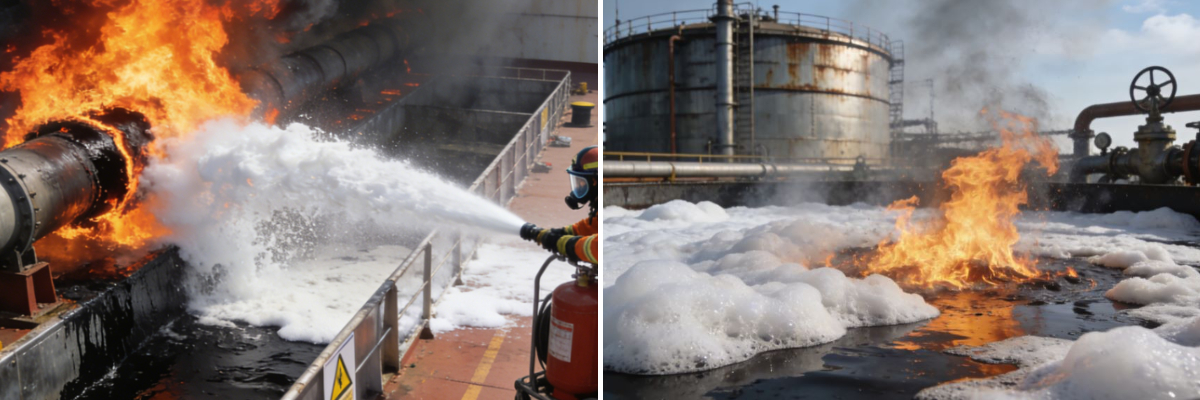
3. Main Application Scenarios
Seaport terminals: oil loading trestles, port fuel tank farms, hazardous liquid container yards, port emergency fire stations
Various vessels: cargo ships, oil tankers, ro-ro ships, for engine rooms, fuel tanks, pump rooms and fixed onboard foam fire systems
Offshore supporting facilities: offshore auxiliary platforms, floating storage units and other nearshore Class B fire protection zones
Coastal chemical plants and coastal oil depots: fire systems supplied with seawater
Note: Seawater-resistant foam concentrate is designed primarily for Class B flammable liquid fires. It shall NOT be used for fires involving reactive metals, chemicals that react violently with water, or high-voltage live electrical equipment.
4. Procurement, Operation, Storage and Maintenance Guidelines
First, confirm the mixing ratio (3% or 6%) during selection to match the proportioner parameters of the foam system. Verify product test reports and ship inspection certificates to ensure smooth acceptance of port and ship fire systems.
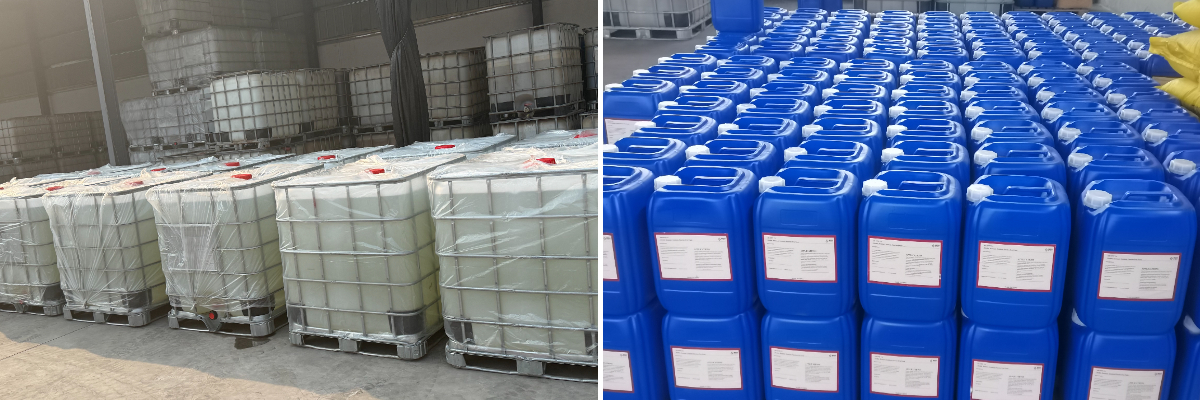
Second, store the agent in sealed containers in cool, ventilated areas away from direct sunlight. Inspect regularly for delamination, turbidity and abnormal odor, and replace the agent before expiry.
Third, perform foaming tests before use, especially for long-stored concentrate. Carry out trial spraying with seawater to verify stable foaming performance.
Fourth, distinguish product categories: seawater-resistant protein foam, fluoroprotein foam and AFFF seawater-resistant foam vary in fire control speed. AFFF seawater-resistant foam with stable foaming and rapid fire suppression is recommended for confined engine rooms.
5. Conclusion
The biggest challenge for port and ship firefighting lies in the limitation of seawater water supply, where ordinary foam liquid fails to meet marine fire suppression requirements. With stable foaming performance in saltwater, dual compatibility with seawater and fresh water, and adaptability to various ship fire systems, seawater-resistant foam concentrate serves as a critical fire protection agent for coastal terminals and fuel tanks and engine rooms of ocean-going vessels.