When to Use Alcohol Resistant Foam?
In modern firefighting and fire prevention systems, choosing the correct extinguishing agent is critical. One of the most specialized and widely used agents for high-risk flammable liquid fires is Alcohol Resistant Foam. It is different from conventional foams. It is specifically engineered to combat fires involving polar solvents and aggressive chemicals. These chemicals can destroy standard foam blankets.This article explores when to use Alcohol Resistant Foam, how it works, and why it is essential in certain industries. We will examine practical use cases, technical advantages, and decision-making factors.
Understanding Alcohol Resistant Foam and Its Unique Properties
Before discussing when to use it, it is important to understand what makes Alcohol Resistant Foam fundamentally different from traditional firefighting foams.
What Is Alcohol Resistant Foam?
Alcohol Resistant Foam is a type of firefighting foam. It is designed to suppress fires involving polar solvents. These solvents include alcohols, ketones, esters, and certain acids. These substances can dissolve ordinary aqueous film forming foam (AFFF). This makes ordinary foam ineffective.
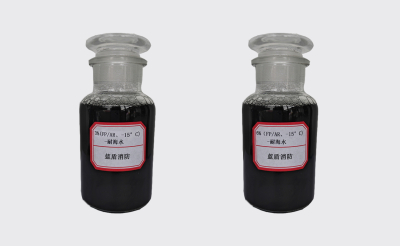
To overcome this, Alcohol Resistant Foam Concentrate contains specialized polymers. These polymers form a protective membrane between the fuel surface and the foam blanket. This barrier prevents the foam from breaking down. It allows the foam to smother the fire, suppress vapors, and prevent re-ignition.
Key Characteristics
Resistant to polar and water-miscible fuels
Forms a stable, long-lasting foam blanket
Effective for both hydrocarbon and solvent fires
Compatible with most foam proportioning systems
Because of these characteristics, Alcohol Resistant Foam Concentrate is considered a versatile solution. It is used in environments where fuel types may vary or change over time.
When to Use Alcohol Resistant Foam in Chemical and Industrial Facilities
One of the most critical scenarios for using Alcohol Resistant Foam is within chemical manufacturing and processing environments.
Fires Involving Polar Solvents
Chemical plants frequently handle substances such as:
Ethanol and methanol
Isopropyl alcohol
Acetone
Ethyl acetate
These polar solvents readily mix with water. They rapidly destroy standard foam. In such cases, Alcohol Resistant Foam is not optional. It is essential.
Alcohol Resistant Foam Concentrate reacts upon contact with the solvent. It creates a polymeric layer. This layer shields the foam structure. This allows firefighters to gain control over fires. These fires would otherwise spread uncontrollably.
Process Areas and Spill Scenarios
In industrial settings, fires do not always originate from storage tanks. They often occur during:
Transfer operations
Reactor leaks
Drum or tote failures
Using Alcohol Resistant Foam in these areas ensures effective suppression. This is true even when the fuel composition is uncertain. This adaptability makes Alcohol Resistant Foam Concentrate a preferred choice. It is preferred for high-risk chemical zones.
When to Use Alcohol Resistant Foam in Fuel Storage and Tank Farms
Another major application for Alcohol Resistant Foam is in bulk fuel storage facilities. This is especially true where multiple fuel types are stored.
Blended and Alternative Fuels
Modern fuel markets increasingly rely on blended fuels such as:
Ethanol-blended gasoline (E10, E85)
Biofuels
Additive-enhanced hydrocarbons
These blends may partially or fully attack standard foam. Alcohol Resistant Foam is designed to handle both hydrocarbon fires and polar solvent fires. It is ideal for these mixed-fuel environments.
By using Alcohol Resistant Foam Concentrate, operators can simplify inventory management. They can also ensure compliance with fire safety regulations.
Large-Scale Tank Fire Protection
In tank farms, foam systems are often pre-installed and automated. Selecting Alcohol Resistant Foam ensures that the system remains effective. This is true even if fuel specifications change in the future.
This future-proofing aspect is a major reason. Alcohol Resistant Foam Concentrate is increasingly specified in international fire codes and engineering standards.
When to Use Alcohol Resistant Foam in Transportation and Logistics
Transportation hubs present unique fire risks. This is due to the constant movement of hazardous materials.
Airports and Aircraft Hangars
Airports handle large volumes of fuel. This includes aviation gasoline and alcohol-based cleaning agents. Fire scenarios may involve spills combined with ignition sources.
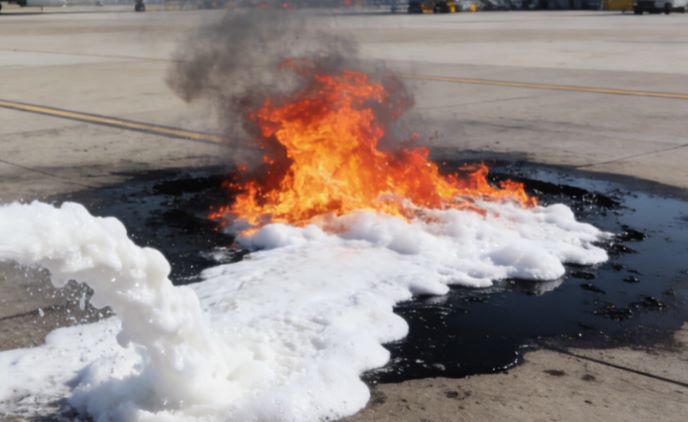
Alcohol Resistant Foam is widely used in airport rescue and firefighting (ARFF) operations. It:
Rapidly suppresses fuel pool fires
Prevents vapor release
Remains effective across different fuel types
Using Alcohol Resistant Foam Concentrate in these environments enhances response reliability. It reduces operational uncertainty.
Ports, Rail Yards, and Truck Terminals
In logistics centers, cargo often includes chemicals. Their exact composition may not be immediately known during an emergency. Deploying Alcohol Resistant Foam allows responders to act decisively. They do not need to wait for fuel identification.
This versatility makes Alcohol Resistant Foam Concentrate an essential component. It is essential in emergency preparedness planning for transportation infrastructure.
When to Use Alcohol Resistant Foam for Emergency Response and Fire Brigades
Municipal and industrial fire brigades must be prepared for a wide range of fire scenarios.
Unknown or Mixed-Fuel Incidents
In many emergencies, first responders do not know what substances are involved. Applying standard foam to a polar solvent fire can worsen the situation.
Alcohol Resistant Foam eliminates this risk. Fire departments equipped with Alcohol Resistant Foam Concentrate can safely attack:
Warehouse fires
Industrial accidents
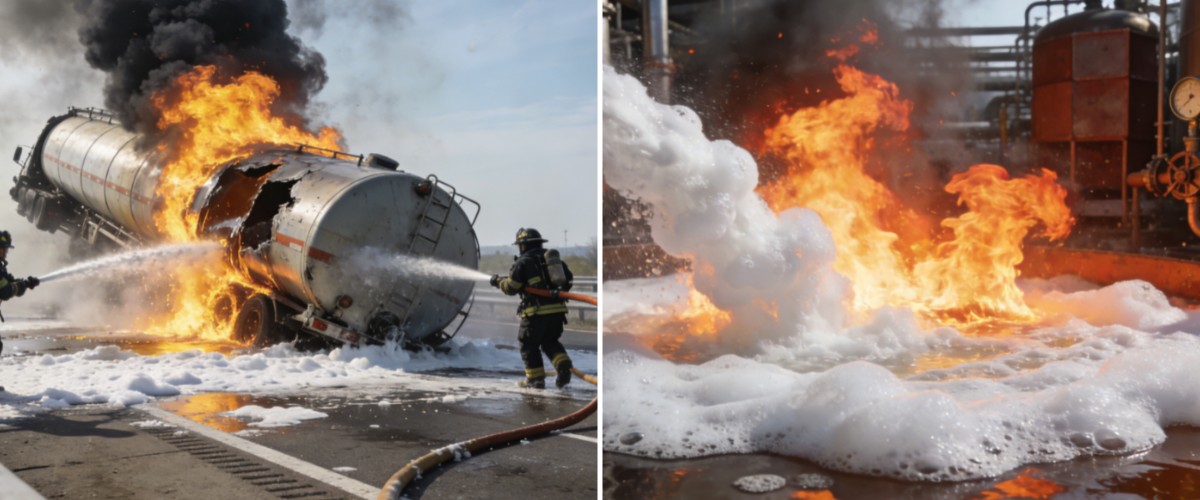
Highway tanker rollovers
Training and Operational Efficiency
Alcohol Resistant Foam may have a higher upfront cost. It reduces the need for multiple foam types. This simplifies training, storage, and logistics.
Fire brigades benefit from a single, reliable agent. This agent is capable of handling diverse hazards. It reinforces the long-term value of Alcohol Resistant Foam Concentrate.
Regulatory and Environmental Considerations
Beyond performance, regulatory compliance plays a significant role. It helps determine when to use Alcohol Resistant Foam.
International Standards and Codes
Many fire protection standards recommend or require Alcohol Resistant Foam. They are for polar solvent hazards. These include:
NFPA standards
EN and ISO guidelines
Industrial insurance specifications
Using approved Alcohol Resistant Foam Concentrate helps facilities meet these requirements. It helps them pass safety audits.
Environmental and Safety Advancements
Modern formulations of Alcohol Resistant Foam are increasingly designed. They have reduced environmental impact. This includes fluorine-free options. Selecting the right Alcohol Resistant Foam Concentrate supports sustainability goals. It maintains fire suppression performance.
Key Factors in Deciding When to Use Alcohol Resistant Foam
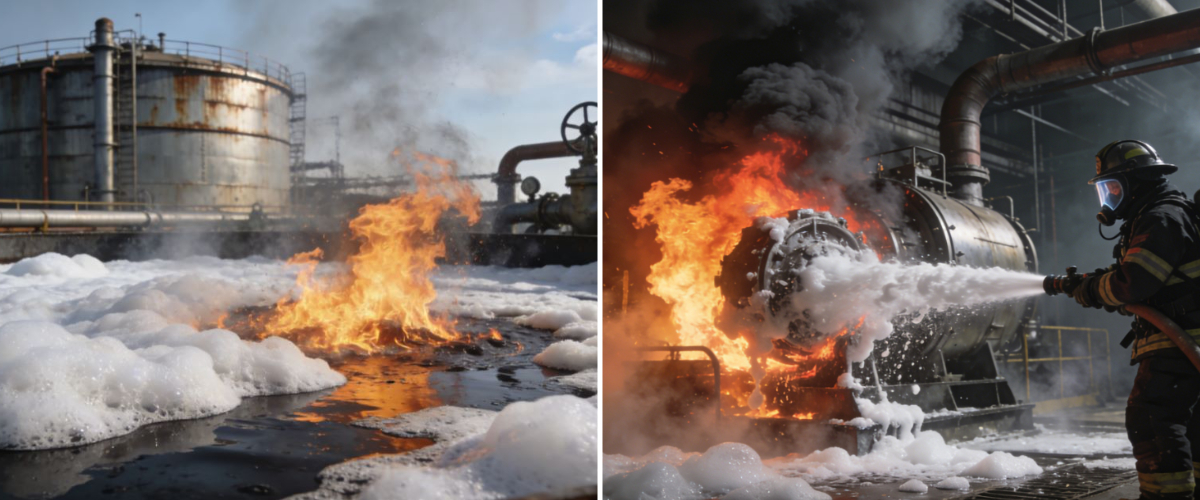
To summarize, Alcohol Resistant Foam should be used when any of the following conditions apply:
Presence of polar or water-miscible solvents
Storage or handling of blended fuels
Uncertainty about fuel composition
Requirement for regulatory compliance
Need for a versatile, future-proof foam solution
Evaluating these factors helps safety managers and engineers make informed decisions. They decide about specifying Alcohol Resistant Foam Concentrate in their fire protection systems.
Conclusion: Why Alcohol Resistant Foam Is a Strategic Firefighting Choice
Understanding when to use Alcohol Resistant Foam is not just about fire suppression. It is about risk management, compliance, and operational resilience. We cover chemical plants, tank farms, airports, emergency response units and more. This specialized foam offers unmatched reliability in complex fire scenarios.
By investing in high-quality Alcohol Resistant Foam Concentrate, organizations can protect lives, assets, and the environment. They can stay ahead of evolving fuel technologies and safety standards. In a world where fire risks are becoming more diverse, Alcohol Resistant Foam remains a cornerstone of modern firefighting strategy.