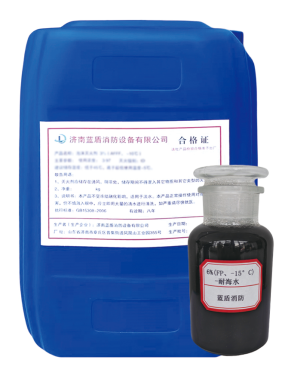
Why Alcohol Resistant Foam Is Needed for Chemical Fires
Chemical plant fires are rarely the simple hydrocarbon fires that most foam systems are designed for. Alcohols, ketones, esters and other water-miscible solvents behave very differently once a fire starts: they mix with water, destroy ordinary foam blankets and burn with a nearly invisible flame. This is exactly why Alcohol Resistant Foam exists, and why it has become a mandatory specification in chemical storage areas, tank farms and petrochemical facilities worldwide. This guide explains the failure mechanism, the working principle, the mandatory application zones and the selection rules that determine whether your Foam Concentrate will actually suppress a polar solvent fire.
1. Why Ordinary Foam Fails on Water-Miscible Solvents
A standard aqueous film forming foam works because water and fuel do not mix. The foam blanket sits on top of the fuel, forms a vapor-sealing film and cools the surface. That entire logic collapses when the fuel is a polar solvent. Methanol, ethanol, isopropanol, acetone, ethyl acetate and MEK are miscible with water, so the water inside ordinary foam is absorbed into the fuel instead of staying on top of it.
Within seconds, the foam structure drains, collapses and disappears into the liquid. The fuel surface is exposed again, vapors reignite and the fire can spread faster than before the discharge. This is the single most common reason a chemical fire re-flashes after an apparently successful knockdown. Any Foam Concentrate chosen for a chemical site must be verified for polar solvent performance, not simply for hydrocarbon approval.
2. How Alcohol Resistant Foam Forms a Protective Barrier
Alcohol Resistant Foam solves the mixing problem with a polymer-based membrane. These high-molecular-weight polysaccharide additives react with the solvent at the interface and form a dense, gelatinous layer that separates the foam blanket from the fuel. The layer acts as a physical barrier: it prevents water from migrating into the solvent and prevents solvent vapor from penetrating the foam.
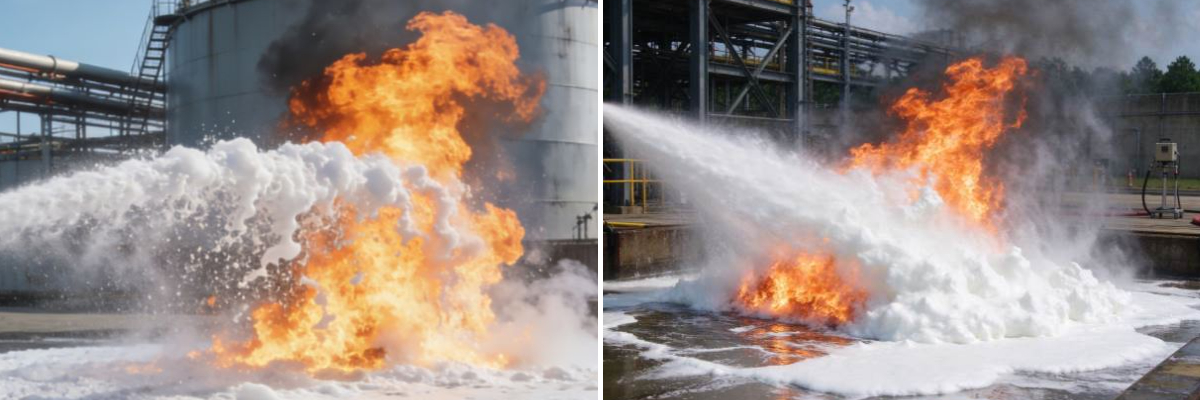
This barrier is what makes Alcohol Resistant Foam effective on both hydrocarbon and polar solvent fires, which is why it is frequently specified as AR-AFFF or AR-protein type. The polymer membrane needs time to form, so application technique matters: the foam must be delivered gently onto the surface, not plunged into the liquid. When the membrane is intact, the blanket stays stable for long enough to cool the fuel below its flash point and allow permanent extinguishment.
3. Where Alcohol Resistant Foam Is Mandatory
Alcohol Resistant Foam is required wherever water-miscible flammable liquids are stored, handled or transported. Typical mandatory locations include methanol and ethanol storage tanks, solvent warehouses, pharmaceutical and fine chemical plants, paint and coating manufacturing, biodiesel facilities, cosmetics production and tank truck or rail car loading racks for polar solvents.
In these environments, specifying the wrong Foam Concentrate is not a minor performance issue but a design defect. Insurance surveys, process safety reviews and fire protection engineering standards increasingly require documented evidence of alcohol-resistant capability, including the correct proportioning ratio and the fuel type the agent was tested against. Facilities that store both gasoline and methanol need a product certified for both, which in practice means Alcohol Resistant Foam rather than a standard AFFF.
4. Selection, Proportioning and Maintenance Rules
Choosing the right agent starts with the induction ratio. Alcohol resistant products are commonly supplied at 3% for hydrocarbon service and 6% for polar solvent service, and some formulations use a 3x3 or 3x6 designation. Using a 3% setting on a fuel that requires 6% will leave the membrane too thin to hold, and the fire will not be controlled. Always confirm the correct ratio for the specific solvent on the drum label and in the manufacturer's data sheet.
The second rule is compatibility. Mixing Foam Concentrate brands, or topping up a tank with a different formulation, can break the polymer system and destroy the barrier effect. Keep dedicated tanks and dedicated proportioners for alcohol resistant stock, and never blend it with standard AFFF residues.
The third rule is inventory control. This Foam Concentrate must be stored in sealed containers away from freezing and direct sunlight, with periodic sampling to check for stratification. Expired or degraded agent may still foam visually while failing to build a membrane, which is the most dangerous failure mode because it looks like success during a test.
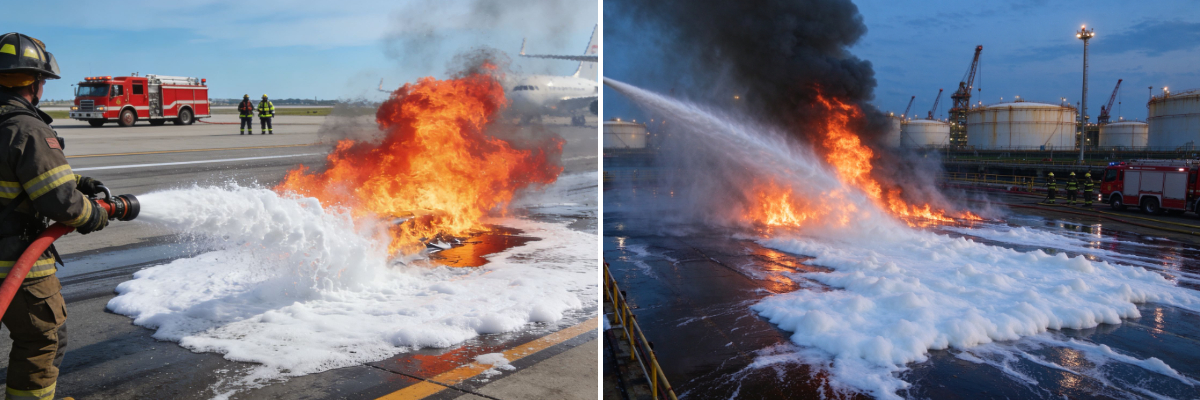
Finally, train the response team. Alcohol Resistant Foam requires slower, gentler application and longer discharge duration than hydrocarbon foam. Crews who apply it like standard foam can rupture the membrane and waste the entire stock, so hands-on drills with the actual Foam Concentrate in use are essential.
Conclusion
Chemical fires involving alcohols, ketones and esters expose the limits of conventional foam in a way that cannot be compensated for by tactics or volume alone. The physical mixing between water and solvent destroys ordinary blankets, and only a polymer membrane barrier can hold the line. Understanding why Alcohol Resistant Foam works, where it is mandatory and how to proportion, store and apply the correct Foam Concentrate is the difference between a controlled incident and an escalating one. For any facility handling water-miscible flammable liquids, alcohol resistant foam is not an upgrade — it is the baseline requirement.